
Iris Recognition vs. Facial Authentication for Access Control
Iris recognition offers unmatched accuracy of 99.99%
Everyone else is trying to replicate the benchmark.
Iris ID set it.
There is only one type of biometric access control trusted to protect the Large Hadron Collider, the busiest international airports around the globe, national border crossings, and the data centers powering the modern economy – iris recognition by Iris ID.
We’ve led the biometric access control sector for nearly three decades, and the competition is still trying to close the gap.
Iris Identification: The Gold Standard in Biometric Authentication
240+
Unique characteristics captured per iris. More data than a finger, face, and hand template combined.
1 in 1078
Odds of two irises matching… identical twins included.
<2 sec
Under 2 seconds to authenticate. Plus, less than 2minutesfor a lifetime enrollment.
10 mths
Stable from 10 months of age. Your iris pattern doesn’t change. Not with weight loss, surgery, aging, a beard, a bad haircut, or the flu.
Face recognition cannot make any of those claims. Neither can any other biometric currently on the market.
Spoof-proof: Countering the AI Assault on Access Control
The rise of AI has, and will continue to change, the way facial access control can be defeated. Even if companies determine a quick fix for the vulnerability, your facility is still a target until the system is patched.
IBM’s 2025 Cost of a Data Breach Report found that 16% of last year’s breaches involved attackers using AI. Deepfake impersonation was responsible for 35% of those incidents.
Iris recognition technology was built for a different threat model from day one.
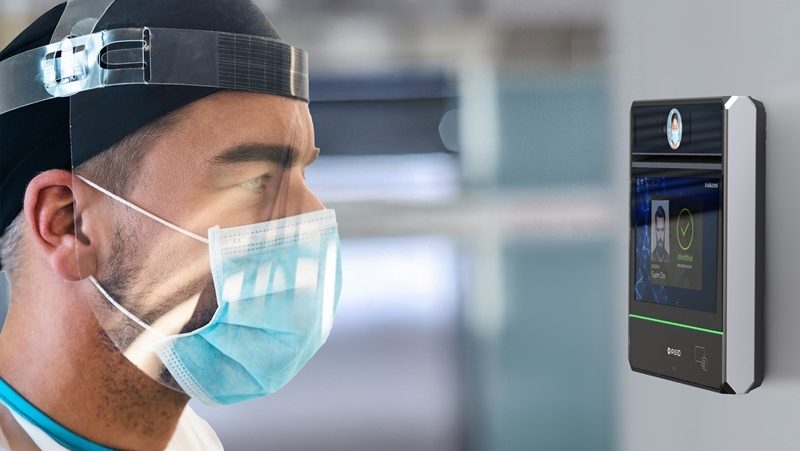
- Works through masks, glasses, hats, hijabs, full PPE, and more
- Does not fail on identical twins
- Independently certified at ISO 30107-3 Level 1 and Level 2 by iBeta, the highest published liveness standard
- Active R&D pipeline already defending against AI-generated spoofing
You can buy a biometric access control that AI is learning to defeat. Or you can buy the one it can’t.
Iris / Face Fusion: True Dual Biometric Authentication – Not Just MFA
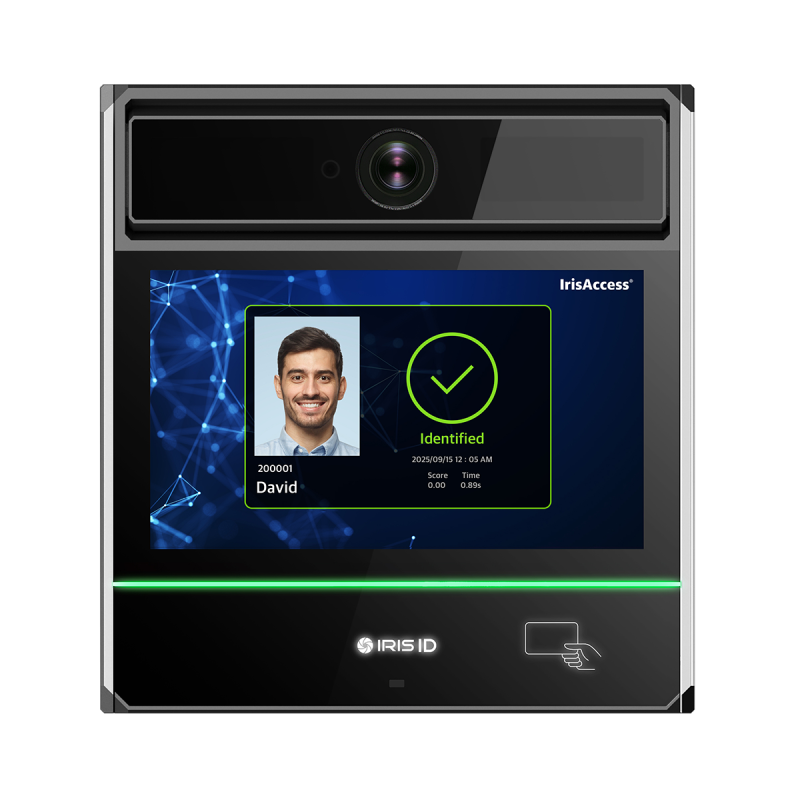
For the world’s most sensitive sites, a single spoofable biometric and a keypad entry just won’t cut it. The Iris ID Iris Access iA1000’s multimodal authentication captures iris and face at the same time, in one interaction, in under a second.
That is what fusion authentication looks like in production: Two independent biometric signals, verified simultaneously, and further protected by optional tertiary credentials when policy requires them.
Inside the iA1000
- Simultaneous iris and face capture
- 99.99% accurate, tested, and proven
- PIN, mobile credential, OSDP, and Wiegand support
- Auto-positioning ADA-308 compliant display
- -40°C to 70°C operating, IP65 rated
- AES-256 encryption with Secure Boot and Root of Trust
- 512-byte iris templates that cannot be reverse-engineered into images
The template architecture is one reason the iris is one of the few biometrics that satisfies GDPR by design.
Twenty-Five Years of Field-Proven Technology and Industry Leadership
A typical corporate campus protects an executive floor, finance area, R&D lab, IT closet and server room with the same single-factor card swipe used at the lobby door. Yet the risk profile of those zones differs greatly from a reception area. Add the daily flow of meeting guests, repair crews, vendors, and unescorted contractors checked in by paper sign-in sheet. Tailgating into restricted zones often goes unnoticed even when surveillance cameras record it.
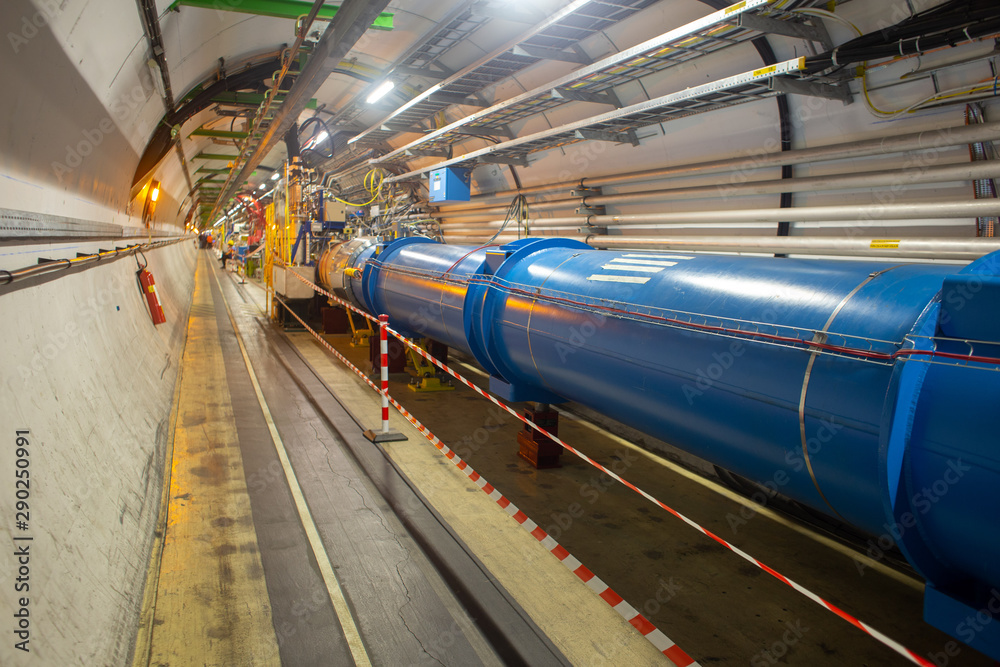
Iris ID has guarded the Large Hadron Collider since 2008, protecting roughly 3,000 daily users, 80 access points, and a 27-kilometer underground particle accelerator.
Integrated across the national immigration clearance system after iris replaced fingerprint as the country’s primary biometric for border control.
Across four continents, in environments where an access control failure carries consequences measured in headlines, Iris ID is protecting people, places, and sensitive information.

Certified. Tested. Trusted.
Loading bays at 2 a.m., overnight lab work, and on-call engineers across time zones are routine in any global enterprise. So is the headache of biometric data residency. As more countries restrict cross-border transmission of biometric templates, a single global rollout becomes legally complicated for companies in regulated jurisdictions.
- NIST IREX tested. First place in single-eye FPIR performance in the most recent results. (See NIST IREX program)
- iBeta ISO 30107-3 Level 1 and Level 2. The highest independently tested liveness standard published today. (See iBeta testing)
- ISO 19794-5, 29794-5, 29794-6. International biometric data and quality standards.
- IEC 62471. Photobiological safety certified for ocular exposure.
- AICPA SOC 2. Service organization controls for security and privacy.
- GDPR-aligned. Iris templates are 512 bytes and mathematically cannot be reverse-engineered into a usable image of an eye.
- 99.99% accurate
A Few Hundred Dollars at the Door. Ten Million at the Breach.
The average data breach in the United States now costs $10.22 million, according to IBM’s most recent benchmark. That figure represents direct costs only – it doesn’t capture regulatory fines, lost contracts, insurance repricing, or the reputational consequences that follow.
A facility can save a few hundred dollars per door by choosing a cheaper face-only reader, but those savings disappear the first time the cheaper reader misses something it shouldn’t have.
The premium on a properly engineered access control system is the cheapest insurance a $10M+ facility will ever buy.
You Can Install the Alternative. Or You Can Install the Answer.
Talk to the team that has spent nearly three decades building the system every competitor is now measured against.